
Telepathology Platform
- Home
- Telepathology
- Telepathology Platform
Data-Driven Workflow Management for Modern Telepathology
The ROSEAId cloud-based platform provides robust tools for secure pathology image data management, collaborative review, and distributed team coordination. This enterprise infrastructure enables secure digital case sharing and seamless multi-site visibility across authorized devices and locations.
Regulatory Notice: ROSEAId platform features and AI-enabled capabilities are investigational and intended for research use only. These features have not been cleared or approved by the U.S. Food and Drug Administration for diagnostic use.
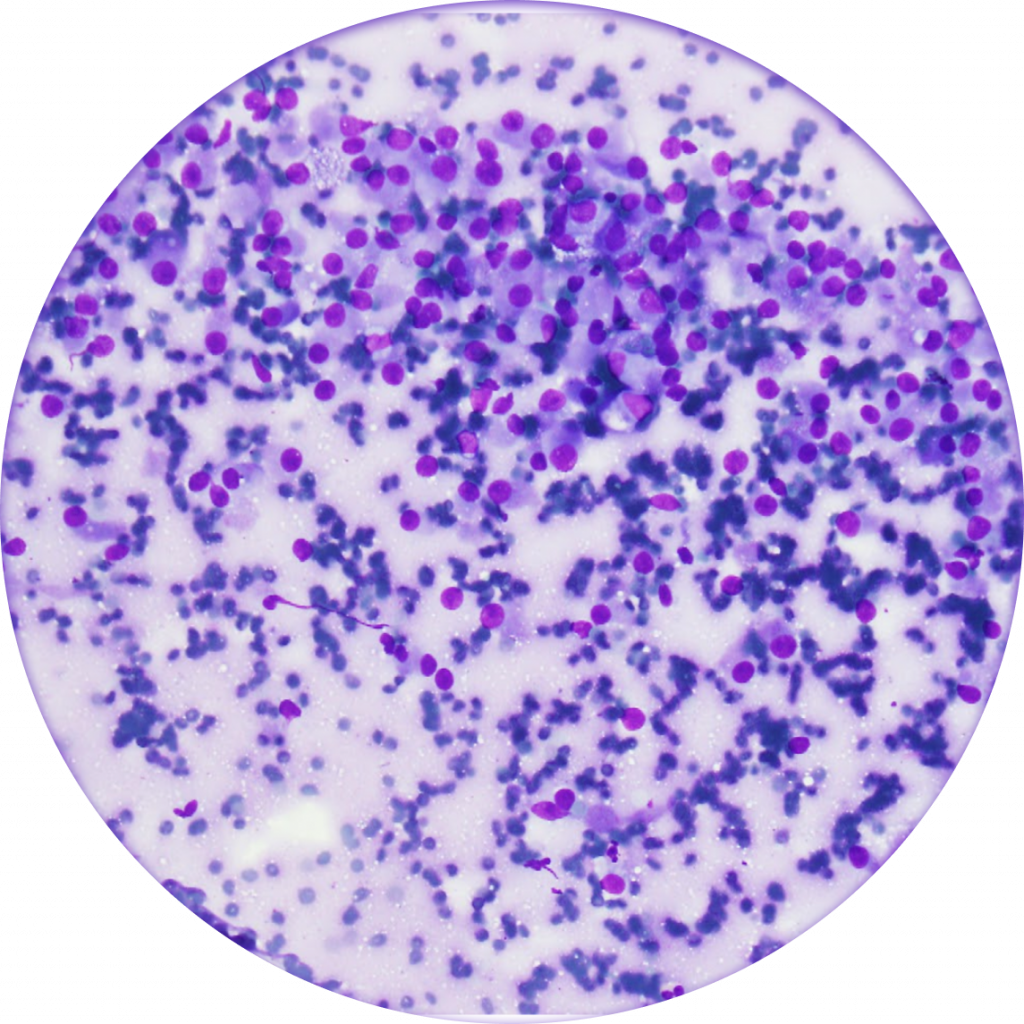
Data-Driven Workflow Management for Modern Telepathology
The ROSEAId cloud-based platform provides robust tools for secure pathology image data management, collaborative review, and distributed team coordination. This enterprise infrastructure enables secure digital case sharing and seamless multi-site visibility across authorized devices and locations.
Regulatory Notice: Certain ROSEAId platform features and AI-enabled capabilities are investigational and intended for research use only. These features have not been cleared or approved by the U.S. Food and Drug Administration for diagnostic use.
About
Holistic Approach to Various Challenges
Telepathology Platform Components
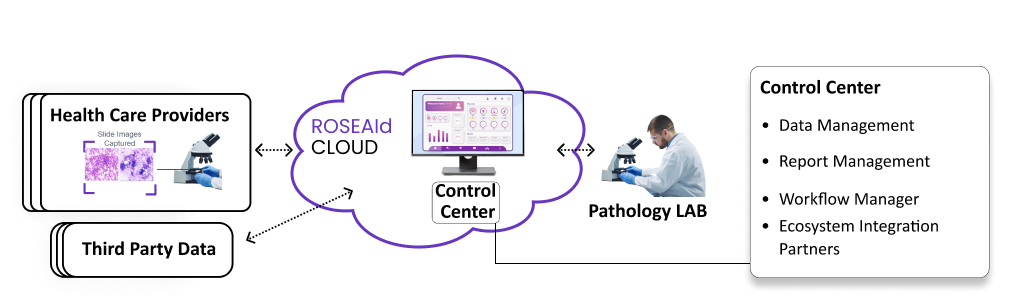
Control Center
A centralized platform to manage, access, review, retrieve, and organize pathology image data and associated records.
Data Manager
- Continual Enrichment of Enterprise Data
- Seamless handling captured field-of-view images and videos
- Connecting across proprietary laboratory systems
Report Manger
- Comprehensive case documentation,
- Digital Image annotations,
- Laboratory records associated with captured pathology images
- Supports ad-hoc and scheduled reporting workflows
Workflow Manager
- Minimize lost time, increased operational efficiency and revenues
- Significantly increase analytical throughput
- Streamlines image data management and collaborated review within existing clinical workflow processes
Ecosystem integration Partners
- System-Agnostic Architecture
- Leverage existing Microscopes
- Secure API’s
Health Care Providers Partner Network
- Interface with Hospital Information Systems
- Link Patient’s charts to field-of-view images and incoming Laboratory data feeds (Cytology, microbiology, urinalysis, pap smears, etc.)
- Provider Proprietary Systems
Use Cases
ROSEAId, Inc. and the University of Texas Health Sciences Center (UTHealth), Houston, Texas, combine their expertise in a collaborative effort to optimize the precision and scope of pathology research, overcoming challenges posed by intricate data sets and diverse structural complexities. Details on a few mentioned use cases are provided below.
- ROSEAId explored Pancreatic Solid Lesions (PSL), training ML models with 1,200 images, refining image acquisition and ML processes. Followed by initiation in subsequent stages of single-cell identification, amended labelling, development of cell-type lists and multi cell scenario capturing diverse combinations in pancreatic lesions. The model demonstrated its capabilities achieving high-rate accuracy in a blind test.
- Preliminary Study Draft and Unified ModelIn preliminary investigational studies, the underlying algorithm demonstrated promising concordance with expert-reviewed assessments. These findings are research observations and have not been reviewed or cleared by the FDA for diagnostic use.
- Subepithelial Lesions (GI) and Lung Lesions (CT-Guided EBUS) comprehensive study was completed affirming the effectiveness of the unified model with 93.25% accuracy.
Why Choose ROSEAId for Your Pathology Solutions ?
Conclusion
ROSEAId, Inc. is committed to advancing pathology workflows through technology, innovation, and strategic collaboration. We have developed a cloud-based platform designed to support pathology image management, remote collaboration, and workflow efficiency. Our long-term vision is to explore innovative technologies that may further streamline pathology workflows, and collaborative review processes, with future capabilities remaining subject to research, validation, and applicable regulatory clearances.
Transforming Pathology with AI into the
Digital Future
Download Slipsheet